
Why is Gold surging toward $4,300 as the US Dollar and Treasury yields ease?
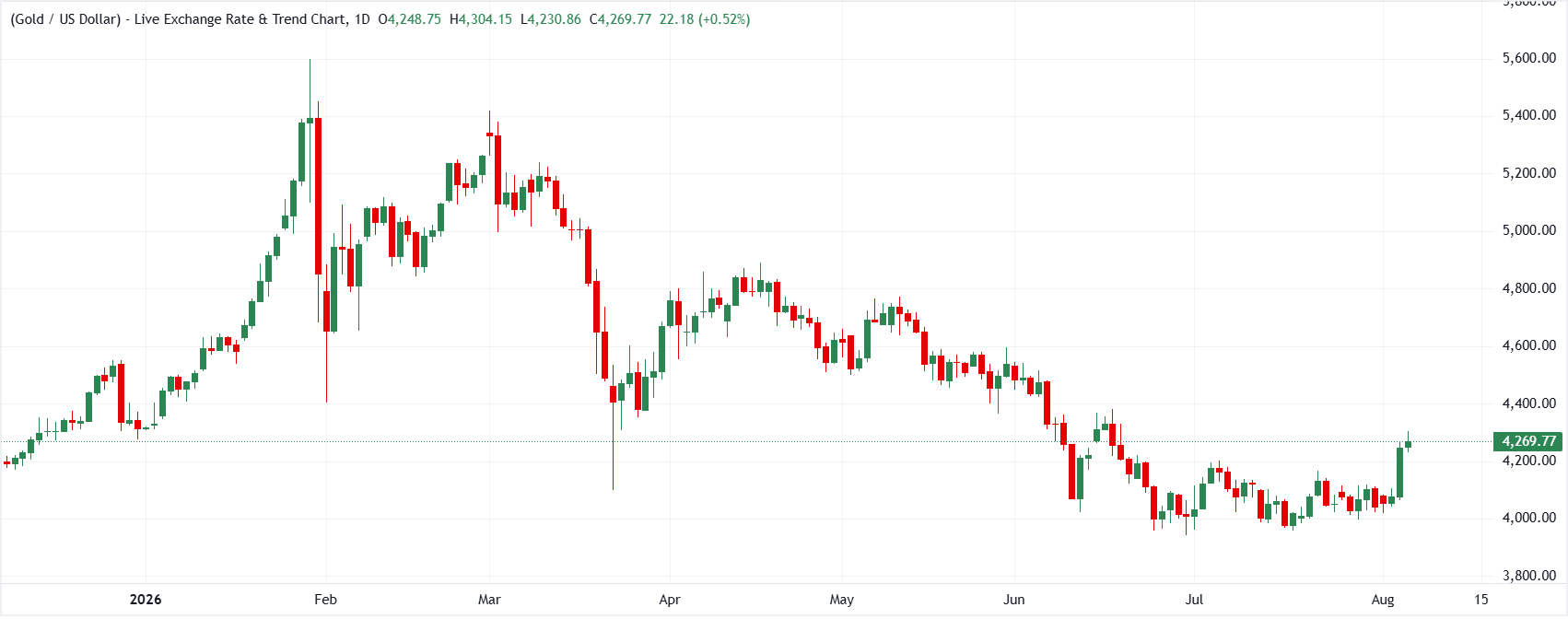
Gold (XAU/USD) has staged a dramatic rebound, surging over 4% on Wednesday to move within striking distance of the $4,300/oz threshold. This rally is being propelled by growing optimism surrounding a potential US-Iran agreement, which has driven crude oil prices lower and significantly tempered market expectations for near-term Federal Reserve (Fed) interest rate hikes. As US Treasury yields and the Greenback ease, bullion is benefiting from a favorable combination of disinflationary energy trends, technical short-covering, and persistent central bank buying.
Institutional Analysis: ING vs. OCBC
To evaluate the primary catalysts and technical boundaries driving Gold's upward breakout, we highlight the core findings from ING and OCBC:
- Macroeconomic Drivers: ING notes that lower energy prices are reducing inflation worries, allowing markets to scale back Fed tightening bets and creating a supportive backdrop for non-yielding assets. OCBC emphasizes that September Fed hike odds have fallen to roughly 55% (down from 66% a week prior), driving down real yields and the US Dollar.
- Market Mechanics: ING attributes the move to fading geopolitical risk premiums offset by dovish rate expectations and strong Chinese investment demand. OCBC highlights that clearing key overhead resistance triggered widespread short-covering and technical buying.
- Central Bank Activity: OCBC flags news that the Bank of Korea is preparing to purchase domestically produced gold for the first time in 13 years alongside recent gold ETF purchases, adding a sentiment boost alongside ongoing Chinese demand noted by ING.
- Key Technical Levels: OCBC identifies near-term resistance at $4,333 (23.6% Fibonacci retracement) and $4,393 (100-day Simple Moving Average (SMA)), with support levels anchored at $4,160 (50-day SMA) and $4,077 (21-day SMA).
Easing energy prices and dovish Fed shifts drive bullion breakout
Commodity strategists Warren Patterson and Ewa Manthey at ING emphasize that the market is shifting its focus from geopolitical risk to the broader macroeconomic relief provided by lower energy prices. As optimism around US-Iran talks weakens crude oil, the disinflationary impulse is easing pressure on the Fed to maintain an aggressive stance, boosting the appeal of gold.
"The market is increasingly focusing on the disinflationary implications of lower energy prices. Expectations for Federal Reserve tightening have eased, improving the outlook for non-yielding assets such as gold. Continued investment demand from China has also helped underpin the market."
Technical buying and official-sector demand reinforce near-term momentum
Echoing this constructive view, Christopher Wong and Sim Moh Siong at OCBC point out that technical factors played a major role in accelerating the rally. Once prices broke above immediate resistance, short-covering took over. Coupled with novel buying signals from central banks like the Bank of Korea, near-term momentum has turned mildly bullish, though upcoming macroeconomic releases remain critical to sustaining the breakout.
"Gold’s strength suggests investors are increasingly pricing a de-escalation of the US-Iran conflict, a normalisation of oil flows through the Strait of Hormuz, lower real interest rates and a softer USD... Near-term momentum has improved, with Friday’s upcoming US payrolls report now key to whether the decline in yields, USD and gold’s breakout can be sustained."
Banks anticipate a sustained upward bias dependent on rate expectations
Based on the assessments from both institutions, the banks project a favorable near-term environment for Gold, anchored by cooling rate-hike expectations and lower Oil prices. ING expects bullion to maintain its support as long as the US Dollar stays soft and Fed policy expectations tilt dovish, even if geopolitical risk premiums continue to dissipate. Concurrently, OCBC cautions that while momentum is mildly bullish toward resistance at $4,333 and $4,393, the longevity of this breakout will ultimately hinge on whether upcoming US payrolls data supports lower Treasury yields and a weaker greenback.
(This article was created with the help of an Artificial Intelligence tool and reviewed by an editor. Know more.)